She Wrote the Song, But You Finished It: How Adi Ulmansky's Music Becomes a Mirror

She Wrote the Song, But You Finished It: How Adi Ulmansky's Music Becomes a Mirror
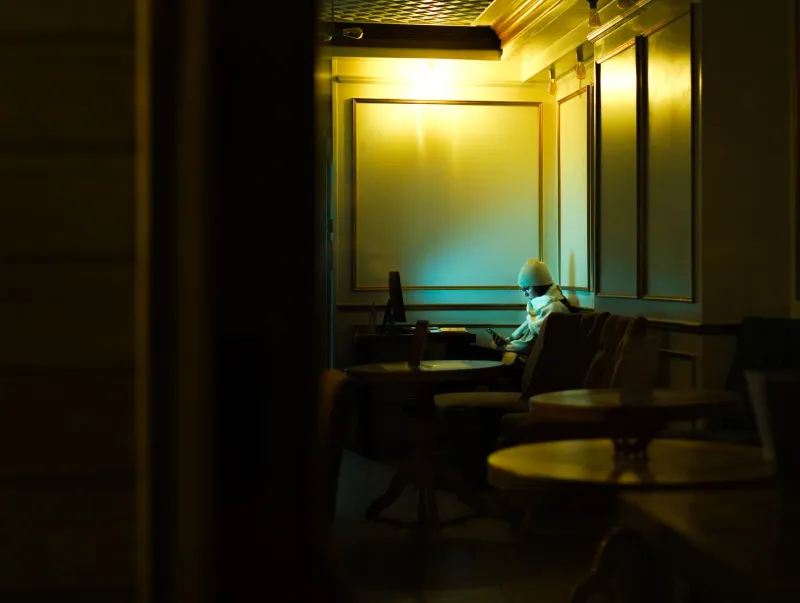
Somewhere in Portland, a woman hits shuffle on a playlist she hasn't touched in months. The first song that comes up stops her mid-step. She's not sure why it hits differently tonight — something about the way the melody curves, the way the lyric lands like it was addressed to her specifically, like Adi Ulmansky had her phone number and wrote the whole thing as a personal favor. She screenshots it. She sends it to three people. She plays it again.
This is not an unusual story. If you spend any time in the communities where Adi Ulmansky's music lives — the Reddit threads, the fan playlists, the comment sections that somehow still feel human — you'll find versions of this moment repeated over and over, across different cities, different ages, different circumstances. The specifics change. The feeling doesn't.
So what's actually happening here? Is it just good songwriting? Or is there something more deliberate going on in how Adi constructs a song — something that makes it feel less like a broadcast and more like a conversation?
The Difference Between Setting a Mood and Reflecting One
Most music is designed to do one of two things: create an atmosphere or deliver a message. Chill playlists set a vibe. Protest songs make a point. Even a lot of deeply personal singer-songwriter material, for all its emotional honesty, is essentially the artist telling you how they feel.
What makes Adi Ulmansky's catalog feel different — and what fans keep circling back to — is that her songs seem to work in reverse. Instead of projecting an emotion outward, they create a kind of open container that the listener pours themselves into. You don't walk away thinking "that song is sad." You walk away thinking "that song knew I was sad."
That's a subtle but enormous distinction.
A listener in Austin described it this way: "I put on one of her songs after a breakup, expecting to just cry it out and move on. But the song didn't feel like a breakup song. It felt like it was asking me questions. By the end, I understood something about myself I hadn't going in. That doesn't happen with music usually."
Another fan, based in Chicago, put it more simply: "She's not singing at you. She's singing with you. There's a difference and you feel it."
The Lyrical Architecture of Open Space
Part of what creates this effect is intentional ambiguity — but not the lazy kind. Adi doesn't leave things vague because she hasn't figured out what she wants to say. She leaves specific, carefully chosen gaps that invite the listener to complete the thought with their own experience.
Think about how she handles pronouns. The "you" in her songs almost never feels like it's directed at a specific person she knows. It floats. It could be a lover, a version of herself, a stranger, you. That floating quality is a craft choice, not an accident.
Her imagery operates the same way. She'll reach for something concrete — a window, a specific time of night, the feeling of a phone call that goes quiet — but she keeps the context deliberately unresolved. The image lands emotionally before it lands narratively, which means your brain immediately starts filling in the story from its own archives.
This is the "she's inside my head" effect that fans describe. She's not inside your head. She built a door that only opens from your side.
What the Melody Is Actually Doing
The lyrical openness is only half the equation. The other half is melodic — and this is where Adi's production instincts get genuinely interesting.
Her melodies tend to resolve in unexpected places. A phrase will start climbing toward what feels like an obvious emotional peak, and then it'll step sideways instead of up. The resolution comes, but from an angle you didn't anticipate. That slight mismatch between what you expected and what you got creates a kind of cognitive-emotional suspension — your nervous system is briefly unsure whether to feel relief or longing, and in that moment of uncertainty, your own emotional state rushes in to fill the gap.
It's a bit like how certain pieces of abstract visual art feel different depending on your mood when you look at them. The work isn't changing. You are.
A music therapist based in Seattle — who also happens to be a fan — described it in terms that felt almost clinical: "There's something in the melodic phrasing that stays open-ended longer than you expect. Your brain wants to close the loop, and when it can't do it externally, it does it internally. You're essentially co-writing the emotional ending every time you listen."
Different Day, Different Song (Same Song)
One of the most consistent things fans report is that the same Adi Ulmansky track can feel like a completely different song depending on when they hear it. Happy version, devastated version, nostalgic version, hopeful version — the notes don't change, but the experience does.
A listener in New York described returning to the same song over a period of two years: "The first time I heard it, I was going through something hard and it felt like grief. Now I play it and it feels like gratitude. I genuinely don't know how that's possible."
What's possible is that the song was never really about one thing. It was built to hold multiple emotional states simultaneously — a kind of harmonic multivalence that sophisticated listeners pick up on instinctively even if they can't name it.
This is different from a song being "timeless." Timeless songs don't age. Adi's songs grow with you, which is a much rarer and more specific quality.
Why This Matters More Than Ever
In an era of algorithmic playlisting and mood-tagged streaming categories, we've gotten weirdly good at using music to manage our emotions from the outside in. Feeling anxious? Here's a calming playlist. Feeling pumped? Here's your workout mix. Music as emotional regulation, delivered on demand.
There's nothing wrong with that. But it's a fundamentally passive relationship with sound.
What Adi Ulmansky offers is the opposite — an active one. Her music doesn't tell you how to feel. It asks you what you're already feeling, then hands you something to hold while you figure it out. That's not background music. That's a conversation.
And maybe that's why fans keep coming back, keep sharing, keep describing those uncanny moments of recognition. Because genuine conversation — the kind that actually helps you understand yourself — is rare. In music or anywhere else.
When you find it, you don't let it go.
Explore Adi Ulmansky's full catalog at adiulmansky.com and find the song that already knows where you are.