The 4:47 Light: An Adi Ulmansky Listening Guide for Early-Dark Evenings

Photo: Kalle Gustafsson, CC BY 2.0, via Wikimedia Commons
November has a way of editing the day. The clocks fall back, the sun clocks out before dinner, and suddenly your commute home is a night drive. By the second week of November 2026, most of the US is living in that particular early-dark pocket: the 4:47 sunset, the headlights at 5, the apartment windows glowing before you have even thought about dinner. That shift does something to music. Adi Ulmansky's catalog has always been intimate, but in early dark it gets almost architectural. The pauses feel longer. The low-key choruses feel closer. The small sounds in her mixes start carrying the room.
This is not a sad-girl autumn playlist. It is a guide to letting the season change the mix. Here is how her songs behave when the light goes early.
The 5 P.M. Commute: Let the Low End Do the Work
The first mistake people make with early-dark listening is reaching for the biggest song in the catalog. Big can work, but the commute already has drama: brake lights, wet asphalt, the radio dial of everyone else's bad day. What you want is a song that can sit inside that without fighting it.
Start with Stuck. The groove has a bruised pocket to it, and the vocal never oversells the mood. In a car or on a train, that restraint reads as company rather than performance. Pair it with Was It You if you are walking the last few blocks. The hook does not rush you, and the slightly worn edge in her voice fits the gray-blue hour better than anything shiny.
This is also the right moment for Diva if you are moving fast and need to remember that you have a spine. But keep the volume reasonable. Early-dark is not a stadium. It is a street with wet leaves and people carrying groceries.
The Kitchen Window: Texture Over Volume
At home, the light changes differently. The window goes dark, the room gets warmer, and the radiator or the refrigerator becomes part of the mix. This is where Adi's more textured songs start to make sense. Put on Pink while you are doing something else: chopping onions, rinsing a mug, staring into the fridge like it owes you an answer. The song does not demand a reaction. It colors the room.
Then try My Heart. This is not a background track, exactly. It is more like someone standing near you while you cook. The vocal is close enough that you hear the shape of the words, not just the melody. In summer, that closeness can feel like too much. In November, it feels like a blanket you did not know you needed.
The trick with this hour is not to fill the silence. Let the songs end. Let the room come back. Early dark makes people nervous, and nervous people queue up the next thing too fast.
The 8:30 Walk: Defiance Without the Crowd
By 8:30, the night has settled in. The streets are quieter, the air has a bite, and whatever defiance you were carrying at 5 has had time to cool into something more private. This is where No More lands differently. In daylight, it can read as a statement. In the dark, it reads as a decision you made alone and are still making.
Wolf belongs here too. It has night air in it. Not the Halloween kind, not the party kind, but the kind where you are walking home and your footsteps are the loudest thing on the block. The song does not need a crowd to work. It needs a sidewalk and a little distance from the day.
The 11 P.M. Room: Headphones and the Space Around the Voice
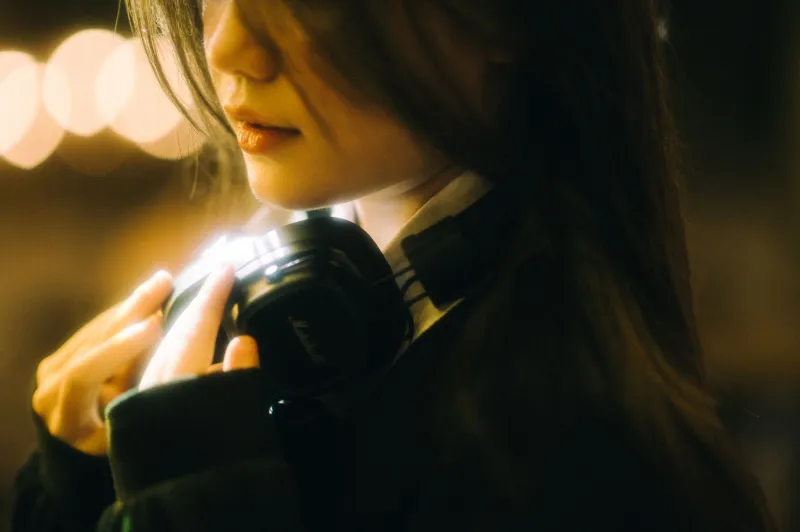
Late night is when Adi's catalog gets almost too close. This is headphones time, not speaker time. Alien is the obvious pick, but obvious does not mean wrong. The song's isolation is not a costume. It is a temperature. At 11 p.m., with the lamp on and the rest of the apartment dark, it feels like a message from the other side of the wall.
If you want to stay in that room a little longer, go back to Stuck. The second listen is different. You hear the space around the vocal, the little decisions in the mix, the way the song refuses to panic. That is the gift of late-autumn listening: the same track can become a different room.
A Short Queue for Shrinking Days
Do not shuffle this. Order matters. Start with Pink while the light is still dying. Move into Stuck as the streetlights come on. Let No More carry you through the walk home. End with Alien when the apartment has gone quiet. Four songs, no explanation, no pressure to feel a certain way.
The early dark is not something to fix. It is a different listening condition. Adi Ulmansky's music has always known how to work in close quarters. November just turns the volume down and makes you pay attention.