Proof of Concept: Why Adi Ulmansky's Home Studio Is the Most Radical Thing in Music Right Now
There's a particular mythology that still clings to the music industry like cigarette smoke in a vintage mixing board. The myth goes like this: real music — the kind that breaks through, the kind that gets under your skin and stays there — gets made in expensive rooms by expensive people with expensive gear. You need the SSL console. You need the Neve preamps. You need the producer with the Grammy on the shelf and the Rolodex full of session musicians.
Adi Ulmansky didn't get that memo. Or maybe she did, and she just chose not to care.
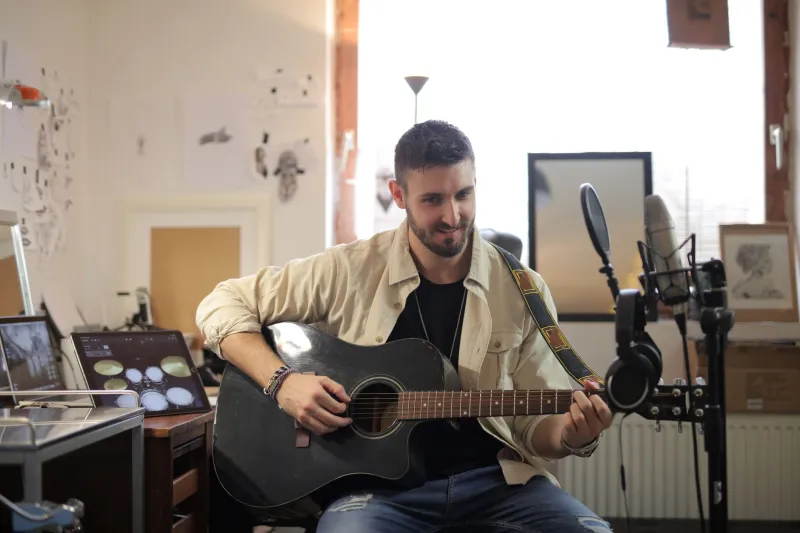
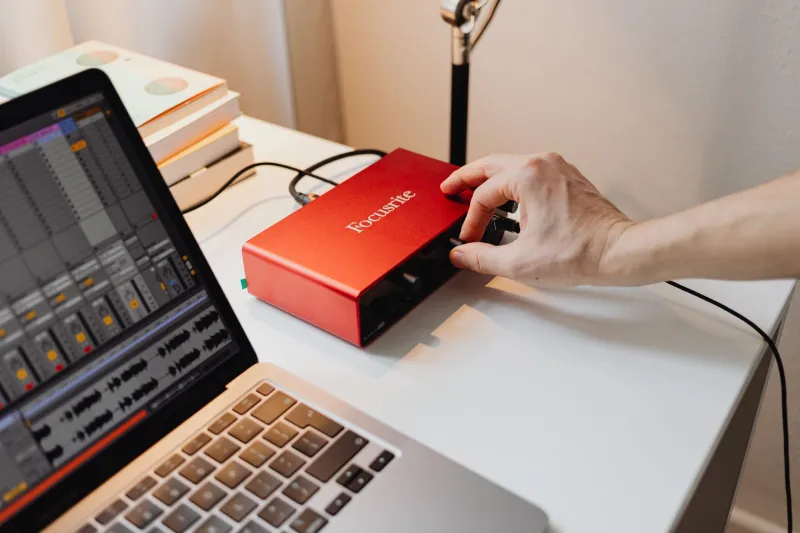
Because what she's been building in her home studio — the records, the textures, the emotional architecture that American listeners have been quietly obsessing over — didn't come from a major-label compound. It came from a setup that most working musicians in the US would recognize immediately: a laptop, a decent audio interface, a pair of studio monitors, and an absolute refusal to let budget become an excuse.
What's Actually in the Room
Let's get specific, because the specifics matter. The bedroom producer conversation tends to get abstract fast — people talk about "vibes" and "authenticity" without ever getting into the actual mechanics. So here's what we know about how Adi works.
The foundation is a DAW setup built around flexibility and feel. She's worked with Ableton Live, which has become something of a lingua franca for independent producers who need a tool that can handle both live performance and intricate studio layering without forcing you to choose between them. Ableton's session view lets you build music in a non-linear way — you can throw ideas at the wall, loop them, rearrange them — and that workflow shows up in how her tracks breathe. Nothing feels over-planned. Everything feels discovered.
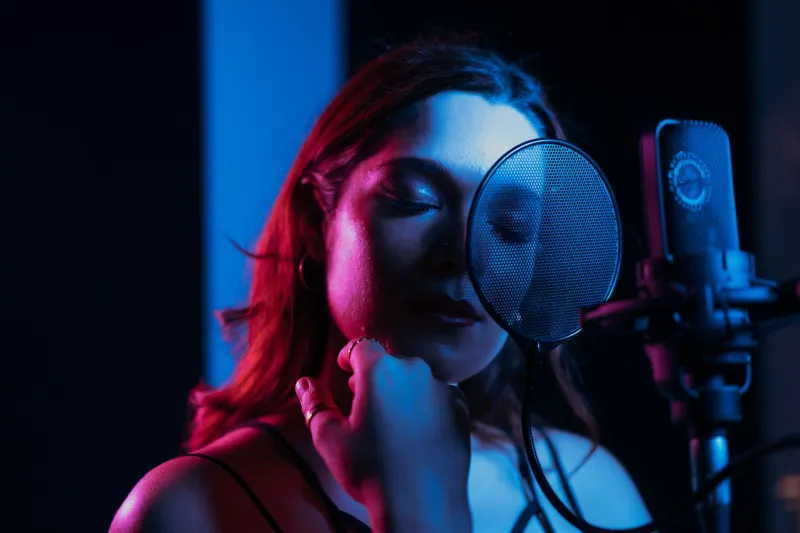
On the hardware side, she keeps it lean. A quality audio interface — the kind that runs you a few hundred dollars, not a few thousand — handles the analog-to-digital conversion. A condenser microphone captures vocals with enough detail to preserve the texture of her voice without sterile over-clarification. And crucially, a good pair of headphones. The headphone mix is where a lot of bedroom producers lose the plot; Adi's mixes translate across speakers, earbuds, and car stereos in a way that suggests she's obsessing over that translation at every step.
The Software Stack That Levels the Playing Field
Here's where the democratization story gets really interesting. The plugins and virtual instruments available to independent producers today would have seemed like science fiction twenty years ago. Adi's sonic palette — those lush, slightly hazy synth textures, the warm low-end, the vocals that sit in the mix like they grew there — can all be achieved with tools that cost less than a single session at a mid-tier studio.
Software synthesizers like Serum, Omnisphere, and the increasingly impressive lineup of free VSTs have effectively closed the gap between bedroom and boardroom, sonically speaking. Reverb plugins that model specific physical spaces. Tape saturation emulators that add the warmth and harmonic distortion that used to require actual tape machines. Compression tools that can make a vocal track feel like it was tracked through a vintage Fairchild.
What separates Adi from someone who just downloaded the same plugins is taste. Knowing what to reach for. Knowing when to stop adding and start subtracting. That's not something you buy — it's something you develop over years of listening and experimenting.
The American Bedroom Producer Who's Taking Notes
Across the US, a generation of DIY artists has been watching what Adi does and quietly reverse-engineering it. In cities like Nashville, Chicago, Portland, and Philadelphia, producers who can't afford major-label infrastructure are using her records as reference tracks — loading them into their DAWs, analyzing the frequency balance, trying to understand how she gets that particular combination of intimacy and scale.
The conversations happening in online producer communities — Reddit threads, Discord servers, YouTube comment sections — are full of people citing her work as proof that the old model is broken. "If she can do that from her setup," the logic goes, "then the ceiling isn't where I thought it was."
This is what genuine democratization looks like. Not a think piece. Not a conference panel. An actual artist, making actual music, in an actual bedroom, and releasing it into the world — where it finds actual people who feel it in their chest.
Why the Major Label Budget Was Always Overrated
The dirty secret of the expensive studio era is that a lot of what those budgets paid for was insurance. The logic was: if we spend enough, we can't be blamed for the failure. Polish became a proxy for quality. But polish and quality are not the same thing, and listeners — especially younger American listeners who grew up on SoundCloud and Bandcamp — have gotten very good at telling the difference.
What Adi's records have is presence. A sense that a real person made them, in real time, with real feelings on the line. That quality doesn't get added in mastering. It either lives in the original performance and the original production choices, or it doesn't exist at all.
The major label machine can spend a million dollars and still not manufacture that. Adi does it with a laptop and a good pair of ears.
The Practical Lesson
If you're a producer or songwriter reading this from your apartment in Austin or your basement in Minneapolis, here's the actual takeaway: the gear is not the barrier. The process is not the barrier. The only barrier is the willingness to put something real into the work and then put the work into the world.
Adi Ulmansky didn't wait for permission. She didn't wait for the right budget or the right connection or the right moment. She built the thing she wanted to hear, in the room she had, with the tools she could access — and it turns out that's exactly what people needed to hear.
That's not a myth. That's a blueprint.