Why Seeing Adi Ulmansky Live Will Ruin Playlists for You (In the Best Possible Way)
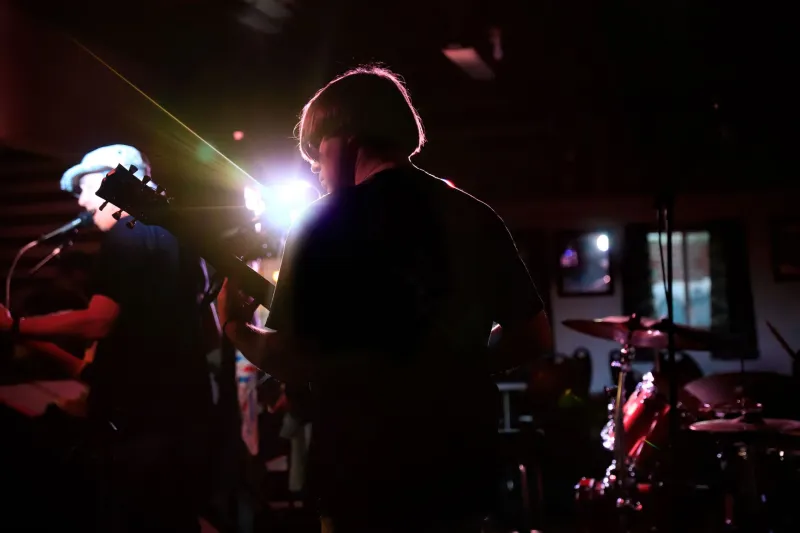
Let's be honest about how most people find Adi Ulmansky. It's a late night, you're somewhere between awake and asleep, and a song surfaces in a playlist you didn't build yourself. Something about it stops you mid-scroll. You replay it. Then you replay it again. By the time you look up, it's 2 a.m. and you've gone three albums deep.
 Photo: Adi Ulmansky, via i.pinimg.com
That's the streaming version of Adi Ulmansky. It's real, it's valid, and it's genuinely great. But there's another version — the live version — and if you've only ever experienced her through a screen or a pair of earbuds, you're working with an incomplete picture.
The Room Changes When She Walks Out
Anyone who's been to an Adi Ulmansky show will tell you the same thing: the energy shifts the moment she steps onto the stage. Not in the pyrotechnics-and-fog-machine way that big-budget arena tours manufacture. In a quieter, more unsettling way. Like the room suddenly has a different gravitational pull.
She doesn't do a lot of the performative warmup stuff — the practiced banter, the hype-building crowd call-and-response. She just... arrives. And somehow that restraint is more commanding than any entrance choreography could be. People lean in. Conversations drop off. The bar noise dims even when the bartenders are still moving. Something about her presence demands attention without asking for it.
For American audiences who've grown up on a certain model of live performance — bigger, louder, more spectacular — this can take a beat to adjust to. But the adjustment happens fast. Within a song or two, you've recalibrated entirely, and the intimacy starts to feel like a gift.
Songs You Know Become Songs You've Never Heard
One of the most interesting things Adi does in a live context is resist the temptation to simply reproduce her recorded tracks note for note. The arrangements breathe differently. A song that's built around layered production in the studio might strip back to almost nothing live — just her voice, a guitar, and the specific silence of a room full of people holding their breath.
Other times the opposite happens. A relatively spare recorded track gets expanded, given more space and more weight, the emotional core of it amplified by the physical reality of being in the room. It's not reinvention for its own sake. It's Adi finding what each song actually needs in that specific moment, in that specific venue, with that specific crowd.
For fans who have the recorded versions memorized — and if you've been listening for any length of time, you probably do — this is disorienting in a genuinely pleasurable way. You think you know exactly what's coming, and then something shifts, and suddenly you're experiencing a song you thought you owned completely as if for the first time.
The Crowd Connection Is Genuine
There's a version of "crowd connection" in live music that's basically performance — the practiced moment where the artist gestures at the audience, says the right thing, hits the emotional beat that's been rehearsed into the set list. Adi's version isn't that.
She's genuinely present with the people in the room. She notices things — a specific face in the crowd, a moment of unexpected laughter, the way a quiet song lands differently than she might have anticipated. And she responds to those things in real time, not in ways that derail the performance, but in ways that make it feel collaborative rather than transactional.
This matters more than it might sound. In an era where so much live music has been scaled up to the point where the artist and the audience exist in essentially different realities — one on a stadium stage, one in a sea of phone screens — the experience of being genuinely seen by a performer is increasingly rare. Adi offers that. And once you've felt it, a lot of other live experiences start to feel hollow by comparison.
The Case for Intimate Venues
Adi has built her US following largely through exactly the kind of smaller, more intimate venues that the live music industry has been quietly championing as the antidote to the bloated arena model. Clubs, listening rooms, mid-size theaters with good acoustics and sightlines that actually let you see the performer's face. These are the spaces where her live show thrives.
And this feels like part of a broader moment in American live music right now. After years of the festival-and-arena pipeline dominating the conversation, there's a real hunger for something more direct. More personal. Audiences — particularly younger ones — are gravitating toward shows where the music is the thing, not the production surrounding it. Where you can actually hear the nuance in a vocal performance without it being crushed by a PA system designed for 50,000 people.
Adi's live show fits that moment perfectly. It's the kind of experience that reminds you why people have always gathered together to hear music in the first place.
What You Carry Home With You
Here's the thing about a great live show that's genuinely hard to articulate: it changes how you hear the recorded music afterward. You go home, you put on an album you've listened to a hundred times, and it sounds different. Not better or worse exactly — just fuller. Because now you know what it sounds like when she's in the room. You know the specific texture of her voice without processing. You know the way a certain song lands when it's landing in real time, in real space, for real people.
That's the thing playlists can't do. They can introduce you, keep you company, fill the space in your day. But they can't give you the memory of a specific night in a specific room when a song hit you somewhere you didn't know you could be hit.
For US fans who've been streaming Adi Ulmansky and wondering if they should bother catching a show — the answer is yes. Immediately. Before the venues get any bigger.