No Borders, No Limits: How Adi Ulmansky Is Rewriting the Rules of American Music
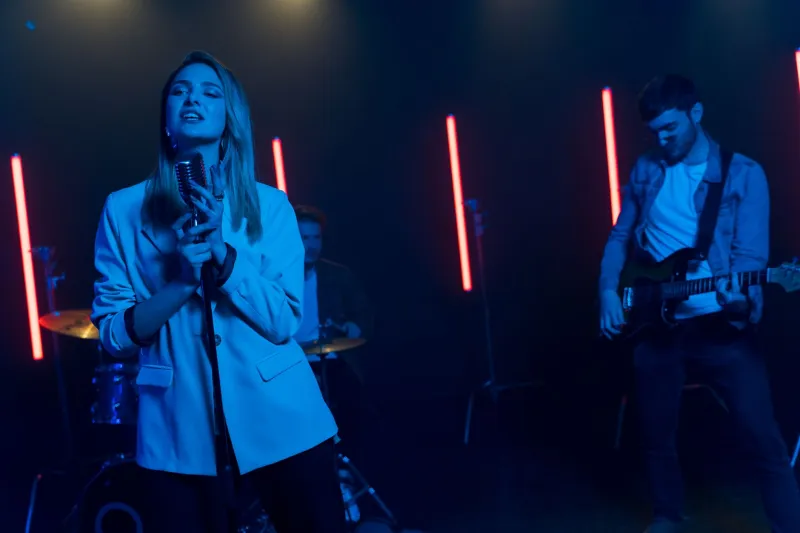
There's a moment in a lot of Adi Ulmansky songs where something shifts. The melody moves somewhere unexpected, a lyric drops into Hebrew mid-thought, or a beat pulls from a tradition you can't quite place on a map. And instead of feeling jarring, it feels like exhaling. Like the music finally stopped pretending.
 Photo: Adi Ulmansky, via ev-database.org
That feeling — of art that refuses to perform a single cultural identity — is increasingly rare. And in the American music market, where commercial success has historically demanded a kind of sonic citizenship, Adi Ulmansky is something of a quiet revolution.
The Old Rules Don't Apply Anymore
For decades, breaking into the US music market meant smoothing out the edges. International artists anglicized their names, softened their accents, and traded regional flavor for something more universally digestible. The message was clear: if you want America, you have to speak its language — literally.
But something cracked open in the streaming era. Suddenly, a song recorded in Seoul or São Paulo could rack up millions of plays in suburban Ohio. BTS filled stadiums. Bad Bunny topped the Billboard Hot 100 without singing a word of English. The gatekeepers didn't disappear, but the gates got a lot wider.
Adi Ulmansky stepped through one of those gaps. Born and raised in Israel, she brings a sensibility shaped by Tel Aviv's restless creative scene — a city that pulses with Mediterranean rhythm, Middle Eastern harmonic tradition, and a ferociously modern pop instinct. When she sings in Hebrew, it's not a niche choice. It's a statement of self. And American audiences, more than ever, are ready to receive it.
 Photo: Tel Aviv, via c8.alamy.com
Language as Texture, Not Barrier
What makes Adi's multilingual approach so compelling isn't just the novelty of it — it's how intentional it feels. Hebrew and English don't compete in her songs; they coexist, each carrying emotional weight the other can't quite replicate.
There's something linguistically intimate about Hebrew. It's an ancient language that sounds startlingly modern when set against electronic production or indie-folk guitar. When Adi uses it, especially in her more vulnerable moments, it creates a layer of interiority that translation would actually flatten. You don't need to understand every word to feel what's being said. Music has always worked that way, of course — think of how many Americans have wept to songs in languages they've never studied.
Her English lyrics, meanwhile, carry a kind of precision that comes from someone who chose the language rather than inherited it. There's a deliberateness to her phrasing, a freshness that native speakers sometimes lose. It's the same quality you hear in artists like MIA, Sia (before she became a global megastar), or early Feist — outsiders who brought a different relationship to English and made it richer for it.
Finding a Passionate American Audience
Here's the thing about the US music market in 2024: it's not one market. It's thousands of micro-communities, each with their own tastemakers, streaming habits, and emotional appetites. And within those communities, there's a growing hunger for music that feels real — not just polished and packaged, but genuinely lived-in.
Adi Ulmansky's fanbase in the US reflects that shift. Her listeners tend to be the kind of people who discover artists through late-night rabbit holes rather than radio. They share songs in group chats with the kind of urgency usually reserved for breaking news. They're drawn to the specificity of her storytelling, the way her songs feel like they're about something particular — a real place, a real feeling, a real version of herself — rather than engineered to appeal to everyone.
That specificity, paradoxically, is what makes her universal. The more honestly an artist renders their own experience, the more other people recognize themselves in it. It's the Phoebe Bridgers principle, the Mitski principle — the deeply personal becomes the widely relatable.
What 'Going Global' Actually Looks Like for an Indie Artist
For major label acts, global expansion usually means massive promotional budgets, strategic playlist placements, and carefully timed international tours. For an indie artist like Adi, it looks a lot scrappier and, honestly, a lot more interesting.
It looks like a song finding its way onto a niche Spotify playlist curated by someone in Brooklyn who has impeccable taste and 4,000 followers. It looks like a TikTok video where someone uses her music as the soundtrack to something emotionally specific and suddenly 200,000 people are searching her name. It looks like word of mouth, the oldest and most powerful promotional tool in existence.
Adi's visual artistry amplifies this. Her aesthetic — deeply considered, emotionally charged, rooted in a particular kind of beauty that feels handmade rather than mass-produced — translates across cultural contexts in a way that purely sonic work sometimes can't. The visual and the musical reinforce each other, building a world that fans want to spend time inside.
The Bigger Picture
Adi Ulmansky's trajectory points toward something important about where American music culture is heading. The question is no longer whether non-English-language artists can find audiences in the US — that question has been answered, loudly, repeatedly. The new question is what it means to be an 'American artist' at all.
If American music has always been a product of collision — of African rhythms meeting European harmony meeting immigrant dreams — then Adi isn't an outsider to that tradition. She's a continuation of it. She's proof that the most vital American art has never really belonged to America alone.
And maybe that's the most American thing about her.