Two Cities, One Voice: How Tel Aviv Made Adi Ulmansky the Artist America Fell For
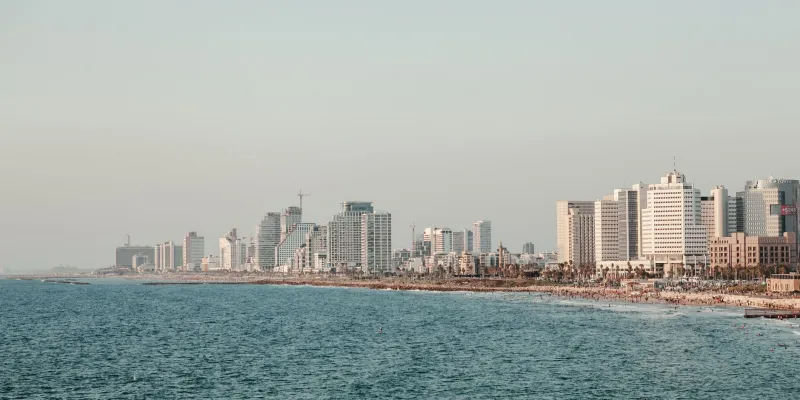
There's a moment in almost every Adi Ulmansky song where something shifts — where the melody does something you didn't see coming, or a lyric lands harder than the verse seemed to be building toward. American listeners often describe it as a kind of emotional surprise. But spend a little time tracing her path from the streets of Tel Aviv to the US stages she's commanding now, and that quality starts to make a lot more sense.
 Photo: Tel Aviv, via assets3.cbsnewsstatic.com
Adi didn't arrive in the American music scene as a finished product. She arrived as someone who had already been tested by two very different worlds — and came out the other side knowing exactly what she was.
Tel Aviv: A City That Doesn't Let You Be Lazy
If you've never been to Tel Aviv, here's the shorthand: it's a city that runs on creative friction. The music scene there is small enough that everyone knows everyone, but ambitious enough that mediocrity gets called out fast. Venues like Levontin 7 and the now-legendary Barby Club aren't just places to play — they're proving grounds. Artists who move through those rooms either find their edge or they don't last.
 Photo: Barby Club, via www.animals-wd.com
For Adi, coming up in that environment meant developing a performer's instinct that's almost impossible to fake. Israeli audiences are notoriously direct. They're not going to clap politely for something that doesn't move them. That kind of pressure either breaks a young artist or sharpens them into something real. Clearly, it did the latter.
The Tel Aviv scene also has a fascinating relationship with genre. Because the city sits at a cultural crossroads — pulling influences from Europe, the Middle East, North Africa, and the broader Mediterranean — the music that gets made there rarely fits neatly into a single box. That sonic restlessness is absolutely embedded in Adi's work. When American listeners describe her sound as "hard to pin down" or "genre-fluid," they're actually picking up on something deeply Tel Aviv about her.
The Language Question (And Why It Made Her Stronger)
One thing that doesn't get talked about enough when discussing immigrant or bilingual artists is what it actually does to your relationship with language when you write songs in more than one tongue. For Adi, navigating Hebrew and English wasn't just a practical challenge — it was a creative one that fundamentally changed how she thinks about words.
Hebrew is a dense, ancient language. It carries enormous emotional and cultural weight in every syllable. English, especially American English, moves faster, breathes differently, rewards a certain kind of directness. Learning to write authentically in both meant Adi developed a kind of lyrical precision that most monolingual songwriters never have to build. She knows what a word costs — because she's had to earn it twice.
That's a huge part of why her English-language writing hits the way it does for US audiences. There's no filler. There's no throwaway line. Every phrase feels chosen.
The Crossing Over: What She Brought With Her
When Adi made the move toward building her presence in the American market, she wasn't starting from scratch — she was arriving with a fully-formed artistic identity and a performance toolkit that had been stress-tested in one of the world's most demanding small music scenes.
But the transition still required translation — not of language, but of context. American indie and alternative audiences have their own set of reference points, their own tastemakers, their own ways of discovering and championing new music. The US music landscape is bigger, louder, and in some ways harder to crack precisely because there's so much of it.
What Adi had going for her was that she wasn't trying to sound American. She was just trying to sound like herself — and it turned out that self was something American listeners were genuinely hungry for. In a moment when so much mainstream music feels engineered and focus-grouped, an artist who carries the grit of real scenes in her bones tends to stand out.
The Venues That Shaped Her Live Game
Live performance is where Adi's backstory becomes most visible. Anyone who's caught one of her sets knows she brings an intensity to the stage that feels almost confrontational in the best possible way — she's not there to charm you, she's there to make you feel something.
That directness traces back to the intimate, no-nonsense club culture she grew up in. Playing small venues in Tel Aviv, where the audience is practically close enough to touch, teaches you to connect on a human level rather than hiding behind production value. It's a skill that scales beautifully — whether she's playing a 200-capacity room in Brooklyn or a festival stage, that intimacy travels with her.
Israeli music festivals also played a role. Events like Meteor and various independent showcases gave her experience performing for audiences who didn't already know her name — the kind of cold-room challenge that builds real stage confidence. By the time she was stepping onto American stages, she'd already earned that confidence the hard way.
What This All Means for the Music You Love
Here's the thing about context: it doesn't change the art, but it deepens it. Knowing where Adi came from doesn't explain away the magic of her songs — it actually makes the magic feel more earned.
When you hear that restless genre-blending in her production, you're hearing Tel Aviv. When you feel the weight behind every lyric, you're feeling what it costs to write in a language that isn't your first. When she holds a room in the palm of her hand at a live show, you're watching someone who learned that skill in some of the most unforgiving rooms on earth.
Two cities made Adi Ulmansky who she is. America just gets to be the place where the rest of the world finds out.