Between Two Worlds: The Story Behind Adi Ulmansky's Most Fearless Art

Between Two Worlds: The Story Behind Adi Ulmansky's Most Fearless Art
The artists who leave the deepest marks are rarely the ones who had it easiest. More often, they're the ones who carried the most — the most distance traveled, the most identities held simultaneously, the most tension between who they were and who they were becoming. Adi Ulmansky is that kind of artist.
 Photo: Adi Ulmansky, via wallpapers.com
Her story is not a straight line. It's more like a conversation between places, languages, and versions of herself — a back-and-forth that has never fully resolved and probably never will. And that irresolution, that productive tension, is the engine of everything she makes.
Tel Aviv as Origin, Not Just Backdrop
To understand Adi's art, you have to understand something about Tel Aviv. It's a city that defies easy description — simultaneously ancient and aggressively modern, a place where Mediterranean light falls on brutalist architecture and the beach is never more than a few minutes away from some of the most intense creative energy in the world. The music scene there is genuinely world-class and almost entirely unknown to most American listeners, which is both a frustration and, in a strange way, a creative advantage.
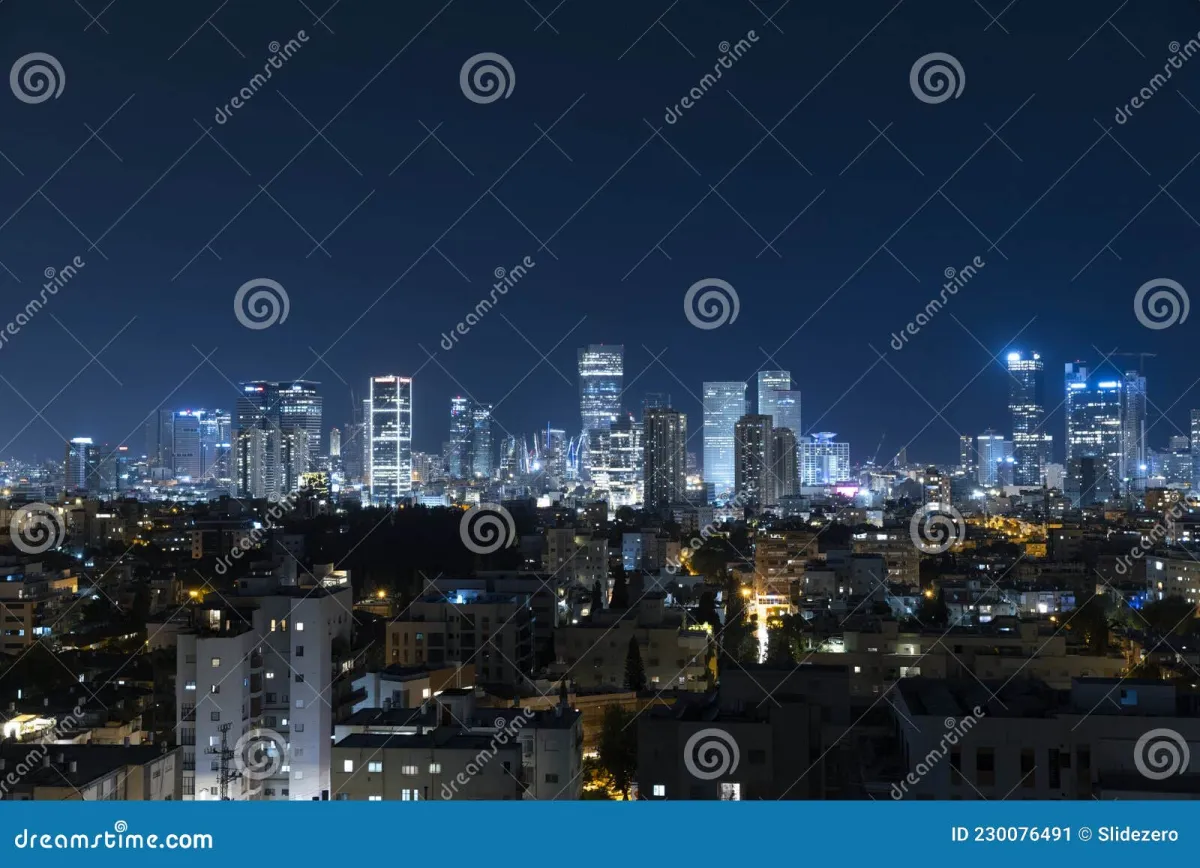 Photo: Tel Aviv, via thumbs.dreamstime.com
Adi grew up absorbing all of it. The sonic landscape of her formative years was layered and contradictory: Israeli pop and traditional folk melodies sitting alongside American indie imports, electronic music from Europe, and the kind of genre-fluid experimentation that happens when a small country develops an outsized creative confidence. She didn't grow up in a musical monoculture, and her work reflects that.
There's a parallel here to artists like Santigold, who grew up between Black American music traditions and broader global influences, or to MIA, whose Sri Lankan heritage and British upbringing created a sound that couldn't have come from anywhere else. The specific collision of influences matters. It produces something that couldn't be manufactured or reverse-engineered.
The Displacement That Made Her an Artist
Moving — really moving, across languages and cultures and expectations — does something to a person. It creates a kind of double vision, an ability to see the place you've arrived at with fresh eyes while carrying the place you came from inside you. For artists, that double vision is gold.
When Adi began building her presence for international audiences, she wasn't starting from scratch. She was translating — not just linguistically, but existentially. She was finding ways to make her specific, rooted, deeply Israeli experience legible to people who'd never set foot in Tel Aviv, who'd never heard Hebrew spoken in casual conversation, who had no reference point for the particular quality of light and noise and feeling that shaped her.
And she did it without flattening herself. This is the hard part, the part where a lot of artists stumble. The temptation to sand down the edges, to become more generically palatable, is real and understandable. Adi resisted it. Her work stayed specific, stayed strange, stayed hers — and that's precisely why it travels.
Identity as Material
The American artists Adi most closely echoes in spirit are the ones who made their own complexity the subject of their work. Think of Mitski, who writes about Japanese-American identity not as a theme but as a lived condition that inflects everything. Think of Perfume Genius, whose queerness isn't a message so much as a frequency his music operates on. Think of Solange, who made an entire album that was essentially a love letter to Black Southern womanhood and watched it become one of the most critically acclaimed records of the decade.
Adi works in that tradition. Her identity — Israeli, Jewish, woman, artist, immigrant of a kind — isn't a brand or a talking point. It's the material. It shows up in the language she chooses, in the harmonic choices that carry traces of Middle Eastern musical tradition, in the visual language of her art direction, in the stories she tells and the ones she leaves deliberately open.
For American audiences who've been paying attention to this strand of deeply personal, identity-rooted artistry, Adi's work arrives with an immediate sense of recognition. Not because her experience is familiar — it isn't, for most US listeners — but because the commitment to honesty is.
The Visual Dimension
Adi Ulmansky is not just a musician. She's a visual artist in the fullest sense, and her aesthetic sensibility is inseparable from her music. The way she presents herself — the imagery, the visual language of her releases, the careful construction of a world that feels cohesive and specific — is part of the work, not decoration for it.
This matters increasingly in the current landscape, where an artist's visual identity is as important as their sonic one. The artists who build lasting cult followings — Florence and the Machine, Lana Del Rey, Björk — do so in part because they create entire worlds, not just playlists. You don't just listen to them; you inhabit something.
 Photo: Björk, via images.ovoko.com
Adi is building that kind of world. It's rooted in her specific cultural and personal history, but it's constructed with the sensibility of someone who understands that art is also communication, that beauty is also argument.
What the Journey Produces
The most powerful work of Adi Ulmansky's career so far has one thing in common: it could only have been made by someone who has lived between worlds. The emotional precision, the linguistic duality, the way her music holds multiple cultural inheritances without collapsing them into each other — these are the products of a specific journey, not a formula.
For American audiences discovering her now, there's something genuinely exciting about that. We're not getting an artist who's been optimized for our consumption. We're getting someone who made art on her own terms and trusted that it would find the people it needed to find.
So far, she's been right.
Adi Ulmansky's story isn't finished. It's barely halfway through its most interesting chapter. But what's already there — the music, the art, the vision, the refusal to be anything other than exactly herself — is more than enough to make anyone pay close attention to what comes next.