3 AM and Only Her Voice Makes Sense: The Quiet Power of Adi Ulmansky After Dark

It almost always starts the same way. Someone's lying in bed, can't sleep, scrolling through a playlist they half-remember saving. A song starts. They don't skip it. Thirty seconds later, they're not scrolling anymore. By the time it ends, they've already hit replay.
That's the Adi Ulmansky late-night effect, and if you've experienced it, you know exactly what I'm talking about.
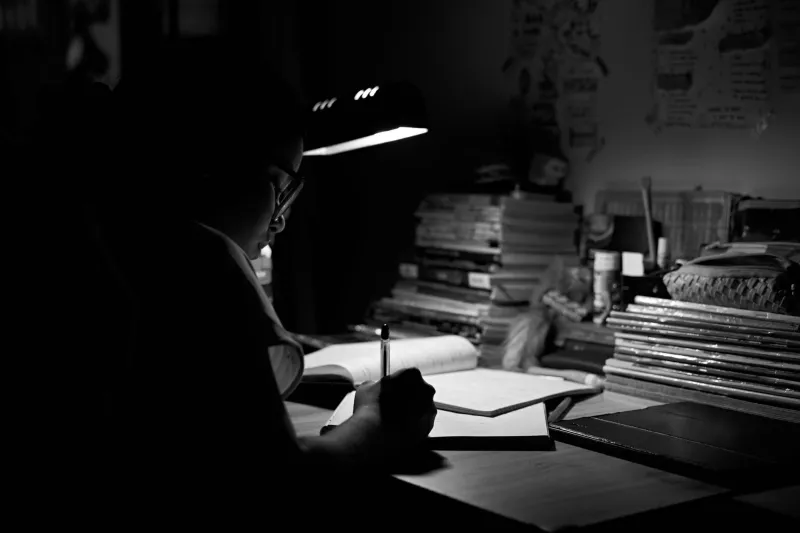
There's something almost uncanny about how well her music fits the specific emotional frequency of 2 or 3 AM — that liminal hour when your defenses are down, the group chat has gone quiet, and you're just... alone with whatever's actually going on inside your head. It doesn't feel like a coincidence. It feels like the music was designed for exactly that moment.
So what's actually happening here? Why does Adi Ulmansky hit so different when the rest of the world goes quiet?
The Psychology of Listening After Dark
First, let's talk about what late-night listening actually does to us, because there's real science behind the feeling.
Research in music psychology consistently shows that we process emotionally complex music more deeply when we're in low-arousal states — tired, calm, slightly vulnerable. The mental noise that crowds our daytime experience — deadlines, notifications, other people's opinions — fades out, and suddenly we have the bandwidth to actually feel what a song is doing. Lyrics that might wash over us in the car on the way to work land like a gut punch at midnight.
Adi's music seems to understand this intuitively. Her songs don't grab you by the collar. They don't need to. They wait. They make space. And when you finally arrive at that quiet hour ready to actually listen, they're already there, patient as anything, ready to say the thing you've been circling around all day.
What Her Sound Does at Low Volume
Here's the thing about a lot of modern pop: it's engineered to compete. Compressed to the ceiling, layered with elements fighting for your attention, mixed to sound impressive on festival speakers or through a phone speaker on a kitchen counter. It's loud music, even when it's technically quiet.
Adi Ulmansky's production philosophy runs in the opposite direction.
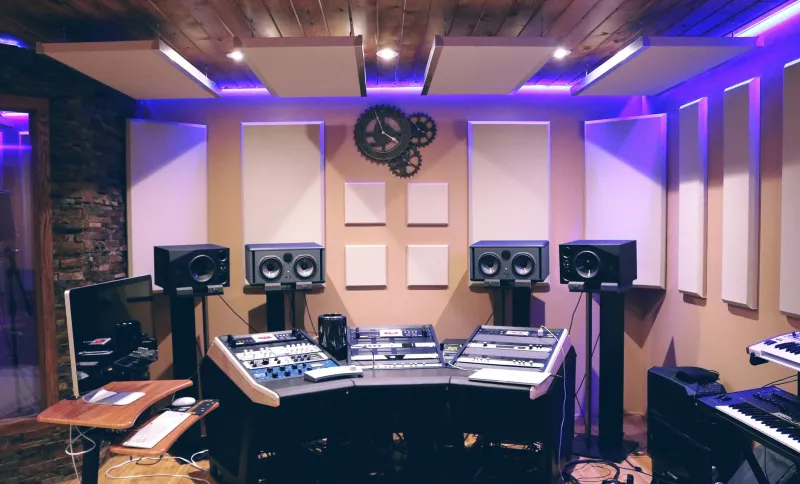
Her sonic palette is built for intimacy. The low-end warmth in her arrangements doesn't punch — it settles. Her vocals sit close in the mix, not buried under reverb or pitch-correction sheen, but right there, like she's in the room. The space between her instrumentation isn't empty — it breathes. There are textures that only reveal themselves at low volume, little details tucked into the corners of a track that reward the kind of focused, quiet listening that headphones at midnight make possible.
Turn one of her songs up loud and it still sounds good. But turn it down, close your eyes, and something shifts. The intimacy of the recording becomes a kind of architecture — a small, warm room built specifically for you to sit inside.
The Lyrical Frequency That Cuts Through
Songwriting that feels personal is everywhere. Songwriting that feels specifically personal — like it was written about something you experienced but never told anyone — is genuinely rare.
Adi has that second thing.
Her lyrics operate in the territory of the almost-said. She writes about the feelings that live just below the surface of what we usually admit to — the complicated grief of something that didn't end badly but just... ended, the strange loneliness that can exist right in the middle of a full life, the way love can feel like relief and like loss at the same time. These aren't abstract emotions. They're hyper-specific, and that specificity is exactly what makes them feel universal.
At midnight, when we're less defended, that kind of lyrical precision hits differently. We're not analyzing the metaphor — we're living inside it. And that's a feeling that algorithmically optimized pop, with its carefully tested hooks and demographic-tested themes, almost never delivers.
Why the Algorithm Can't Manufacture This
We're living in an era of extraordinarily sophisticated music recommendation systems. Spotify knows what you listened to at 11 PM last Tuesday. Apple Music tracks your skip rate. These platforms have gotten remarkably good at predicting what you'll tolerate.
But there's a difference between music you'll tolerate and music that finds you.
The songs that become genuinely important to people — the ones they remember where they were when they first heard them, the ones they play when something real is happening in their lives — almost never arrive through a perfectly optimized algorithm. They arrive through a friend's recommendation, a playlist rabbit hole, a moment of accidental discovery. And they stick because they feel like something no machine could have sent specifically to you.
Adi Ulmansky's American audience has been built largely through exactly that kind of organic, person-to-person discovery. People find her late at night, feel found by her music, and then immediately need to tell someone else about it. That's not an algorithmic outcome. That's a human one.
The Specific Loneliness She Speaks To
American culture has a complicated relationship with solitude. We celebrate busyness. We treat packed calendars like status symbols. And yet — especially post-pandemic, especially among younger listeners — there's a growing recognition that a lot of us are navigating a deep, quiet loneliness that the noise of daily life helps us avoid thinking about.
Adi's music doesn't avoid it. It walks straight into that room, sits down beside you, and says: yeah, I know this place too.
That's not a small thing. In a cultural moment when so much entertainment is designed to distract, music that actually accompanies you in your harder moments is increasingly rare and increasingly valuable. Her songs don't try to fix anything or wrap it in a bow. They just make you feel less alone inside whatever you're carrying.
Why Midnight Is When You Finally Hear Her
Maybe the real reason Adi Ulmansky hits so hard after dark is simple: that's when you're finally paying attention.
During the day, we're half-listening to everything. Music becomes background, ambient noise, a rhythm to work or commute to. But late at night, when the distractions dissolve and it's just you and whatever's actually true about your life right now — that's when a song can do what songs are supposed to do. That's when the right voice at the right moment can feel like someone reaching through the speaker and saying I see you.
Adi Ulmansky has built something that earns that moment. The production, the lyrics, the emotional honesty of her delivery — all of it conspires to make her music feel like a private conversation, one that somehow only works when everything else has gone quiet.
If you haven't had your 3 AM moment with her yet, it's coming. Just wait until the world gets quiet enough to hear it.