Track One to Track Last: The Hidden Story Adi Ulmansky Tells Through Song Order
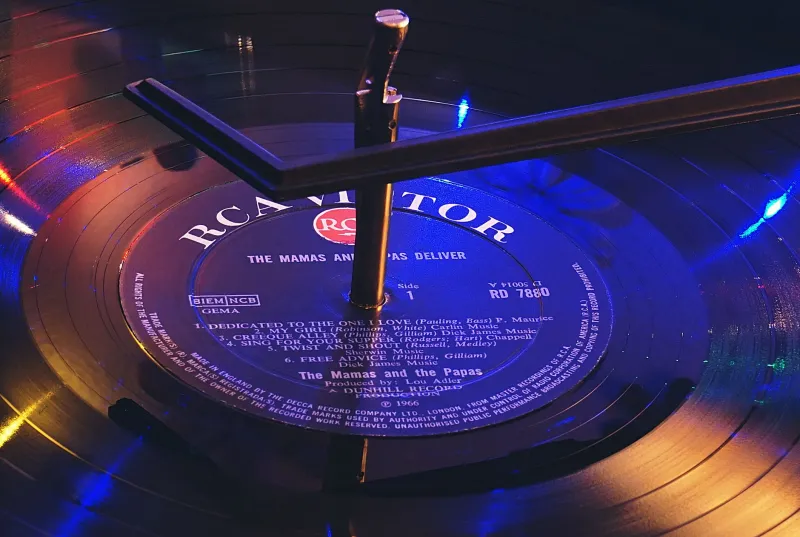
There's a moment — you probably know it — where you're halfway through a run of Adi Ulmansky tracks and something shifts. Not just the tempo, not just the mood. Something structural. Like a door opening into a room you didn't know was there. That feeling isn't accidental. It's engineered, song by song, in the exact order she intended.
Sequencing is one of the most underappreciated crafts in music. In the streaming era, when algorithms scatter individual tracks across a thousand different playlists and shuffle is basically the default, the idea that an artist would spend serious time agonizing over which song comes after which sounds almost quaint. But for Adi Ulmansky, it's as essential as the writing itself.
The Album as a Single Sentence
Think about the American albums that changed how people listened. Fleetwood Mac's Rumours doesn't open with its most devastating track — it builds toward it. Kendrick Lamar's To Pimp a Butterfly is practically unlistenable out of sequence because the emotional logic depends on accumulation. Beyoncé's Lemonade was designed as a visual and sonic arc, where moving a single chapter would collapse the whole structure.
Adi operates in that same tradition, even if the scale and context differ. Her releases aren't random drops. They're curated experiences with a beginning, a middle, and something that lands like an exhale at the end.
When you start at track one and let it run, you're not just hearing songs. You're being walked through something. A conversation. A reckoning. A night that starts uncertain and ends somewhere more honest.
Opening Moves: How She Sets the Table
The first track in any Adi Ulmansky sequence is almost always a form of invitation rather than a declaration. She doesn't come out swinging. She opens a window. There's usually something atmospheric, something that says come in, sit down, we're going to talk — before the real weight arrives.
This is a deliberate choice. In American pop culture, we're trained to expect the lead single up front, the biggest hook, the immediate grab. Adi resists that. She treats the opener as a threshold, not a highlight reel. By the time the emotional core of a release hits you, you've already been softened up. You're already inside the story.
It's the difference between walking into a movie theater and sitting through the previews versus being dropped into the action mid-scene. One approach gives you time to adjust your eyes to the dark.
The Middle Section: Where the Architecture Gets Interesting
If the opening is an invitation, the middle of an Adi Ulmansky sequence is where the architecture gets genuinely interesting. This is where she tends to do her most surprising work — placing a track that feels almost uncomfortably raw between two that are more melodically polished, or dropping something spare and minimal right after something that was building toward a crescendo.
Those juxtapositions aren't accidents or oversights. They're pressure valves. They control how much emotional tension the listener can hold before needing a release. It's the same instinct a great short story writer uses when they follow an intense scene with something quieter — not to undercut the intensity, but to let it breathe and settle.
In a lot of ways, the middle of her sequences work like the second act of a play. The stakes have been established. The characters (or in this case, the emotional states) are in conflict. And the resolution isn't here yet — but you can feel it getting closer.
Closing Arguments: The Songs That Land Last
Adi's closers deserve their own study. The final track in any sequence she controls tends to feel less like an ending and more like an arrival. There's a difference. Endings close doors. Arrivals suggest you've gotten somewhere.
She rarely resolves things neatly. The last song isn't usually the triumphant one, or the most lush, or the most produced. Often it's stripped back. Almost conversational. Like she's saying okay, we've been through all that — now here's what I actually think.
That restraint is hard to pull off. Most artists front-load their best material because the algorithm rewards early engagement. Adi trusts the listener to stay. And if you do stay — if you let a full sequence run without skipping — that closing track hits differently than it ever would in isolation. Context is everything.
Why This Changes How You Should Listen
Here's the practical takeaway: if you've been shuffling Adi Ulmansky or pulling individual tracks into your own playlists, you've been hearing her work at about sixty percent. Which, to be clear, is still really good. But you're missing the grammar.
Try this instead. Pick one of her releases. Start from the beginning. Don't skip. Don't shuffle. Give it one uninterrupted sit — a commute, a late night, a run where you let the sequence dictate the pace instead of the other way around. By the time you get to the last track, you'll understand what all the fuss is about in a way that no single song could communicate on its own.
The songs are chapters. The sequence is the book.
A Craft That Deserves More Credit
In an era where the single is king and the album is supposedly dying, the fact that Adi Ulmansky still thinks this carefully about order is worth calling out. It's a form of respect for the listener — a belief that you're willing to follow something through, that you can handle complexity, that you don't need everything front-loaded and obvious.
It's also, honestly, a little radical. In the attention-economy version of the music industry, where every release is optimized for the first fifteen seconds of a TikTok clip, choosing to build something that only fully reveals itself over time is a genuine act of artistic stubbornness.
And that stubbornness is exactly why her music keeps finding new listeners. People discover one song, pull on the thread, and end up somewhere they didn't expect — somewhere that feels like it was waiting for them all along.
That's not luck. That's sequencing.